
If you have ever watched your dog clear a 3-foot fence without breaking stride or come home to find a fresh tunnel dug under the gate, you already know that not every fence is a good dog fence. The right fencing keeps your dog safely in the yard and gives you peace of mind when you let them outside. The wrong fence can quickly become a cycle of repairs, patching, and plugging escape routes.
At Fencing By Wall, we have been building fences for families across the North Shore since 1988, and many of our fencing projects start with a simple goal: keeping the family dog safely in the yard. In this guide, we compare the best backyard fence options for dogs and explain how to choose the right one based on your dog's size, habits, and favorite escape tactics.
Start With Your Dog, Not the Fence
Before choosing a fence material, start with your dog. A fence that works perfectly for a mellow senior beagle may not last a week with a young husky determined to get out. Most dogs that escape tend to rely on one or more of a few common strategies:
- Jumpers and climbers: Athletic breeds like shepherds, huskies, and labs can clear 4 feet with little effort. Some will scale chain link by using the mesh as a ladder. These dogs usually need a 6-foot fence with a smooth face.
- Diggers: Terriers, beagles, and bored dogs of every breed will dig in soft soil along the fence line. A dig barrier below grade solves most of this.
- Chewers: Some dogs gnaw on wood pickets or rails, especially when they are anxious. Metal and vinyl hold up much better.
- Reactive barkers: If your dog charges the fence every time someone walks by, a solid fence that blocks the view often calms things down.
- Small dogs and puppies: Gaps matter more than height. Wide picket spacing or a gap under the gate can let a small dog squeeze right through.
Most dogs fit more than one category, so it helps to decide which behavior worries you most to determine the best type of fencing.
The Best Dog Fence Options for Backyards
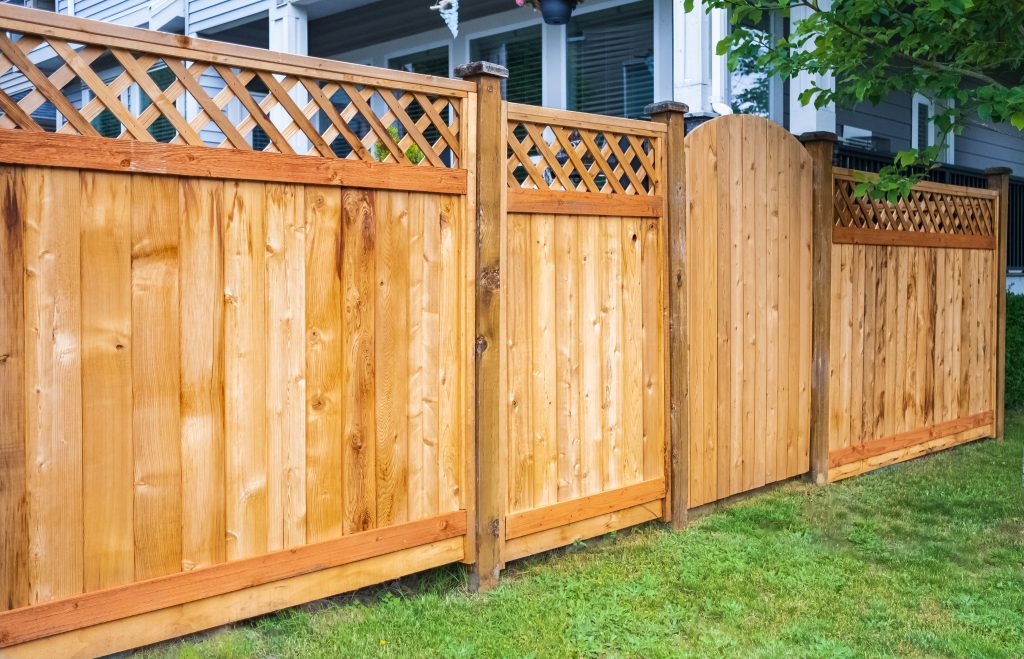
Wood Privacy Fence
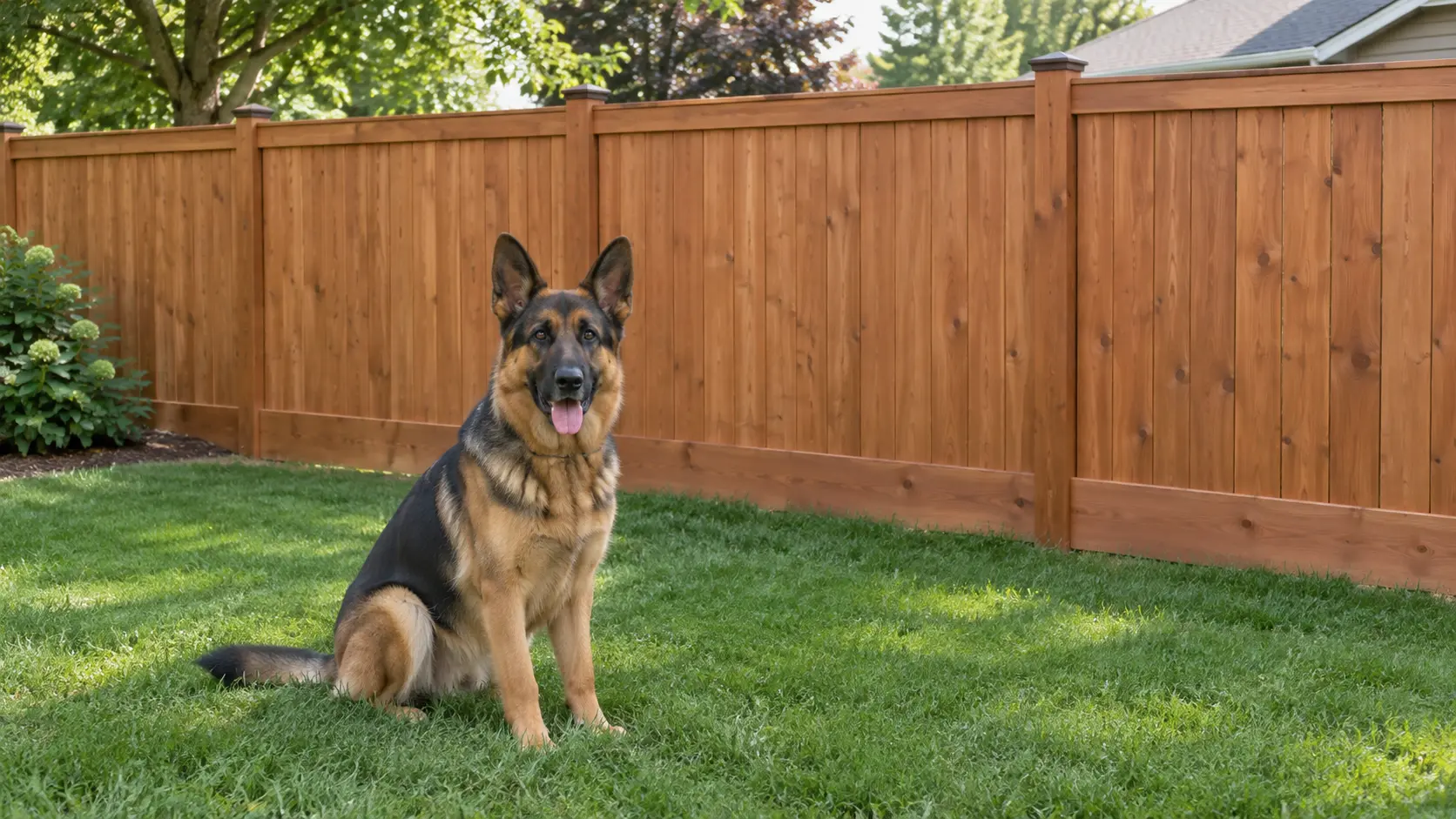
A 6-foot wood privacy fence is one of the most popular dog fences on the North Shore, and for good reason. The solid boards block sightlines, which cuts down on barking and fence running, and the smooth face gives climbers nothing to grip. It is also easy to add a dig guard along the bottom.
The tradeoff is upkeep. Wood needs staining or sealing every few years, and Chicago area freeze and thaw cycles can loosen boards over time. If your dog is a chewer, plan on replacing the occasional board or consider a metal kick plate along the base.
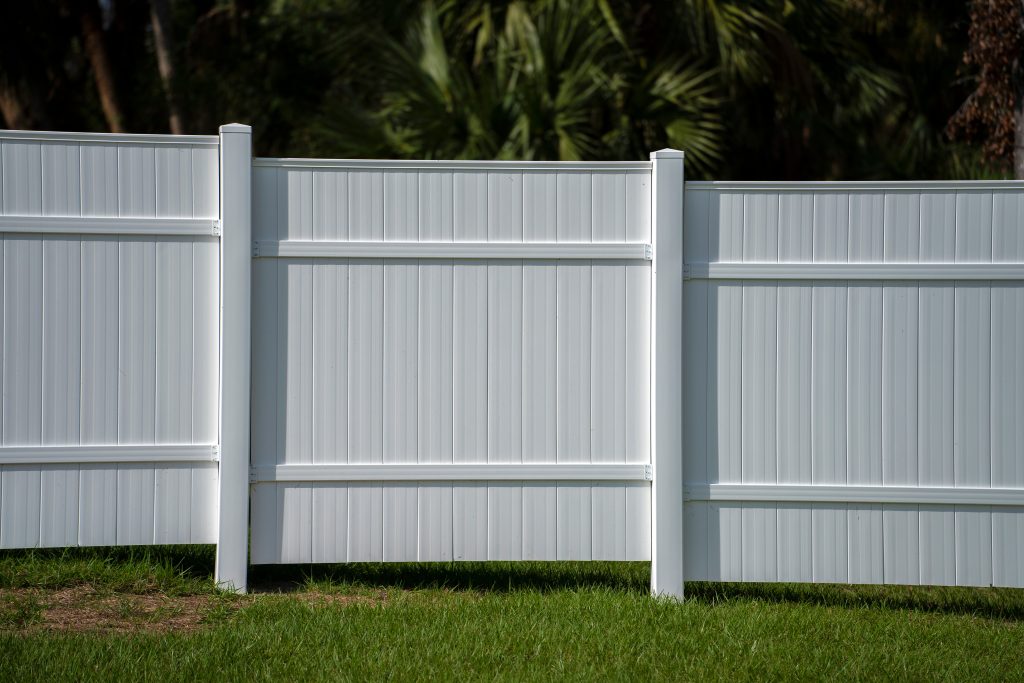
Vinyl Privacy Fence
Vinyl gives you the same full privacy as wood without any painting or staining. The surface is slick, so even determined climbers have a hard time getting a foothold, and there is nothing for a dog to chew into.
Vinyl panels sit on a bottom rail, so the space underneath needs attention if you have a small dog or a digger. We often pair vinyl with a buried wire barrier or set the bottom rail closer to grade to close that gap. Vinyl typically costs more than wood upfront, but it tends to come out ahead over the years because there is so little maintenance.
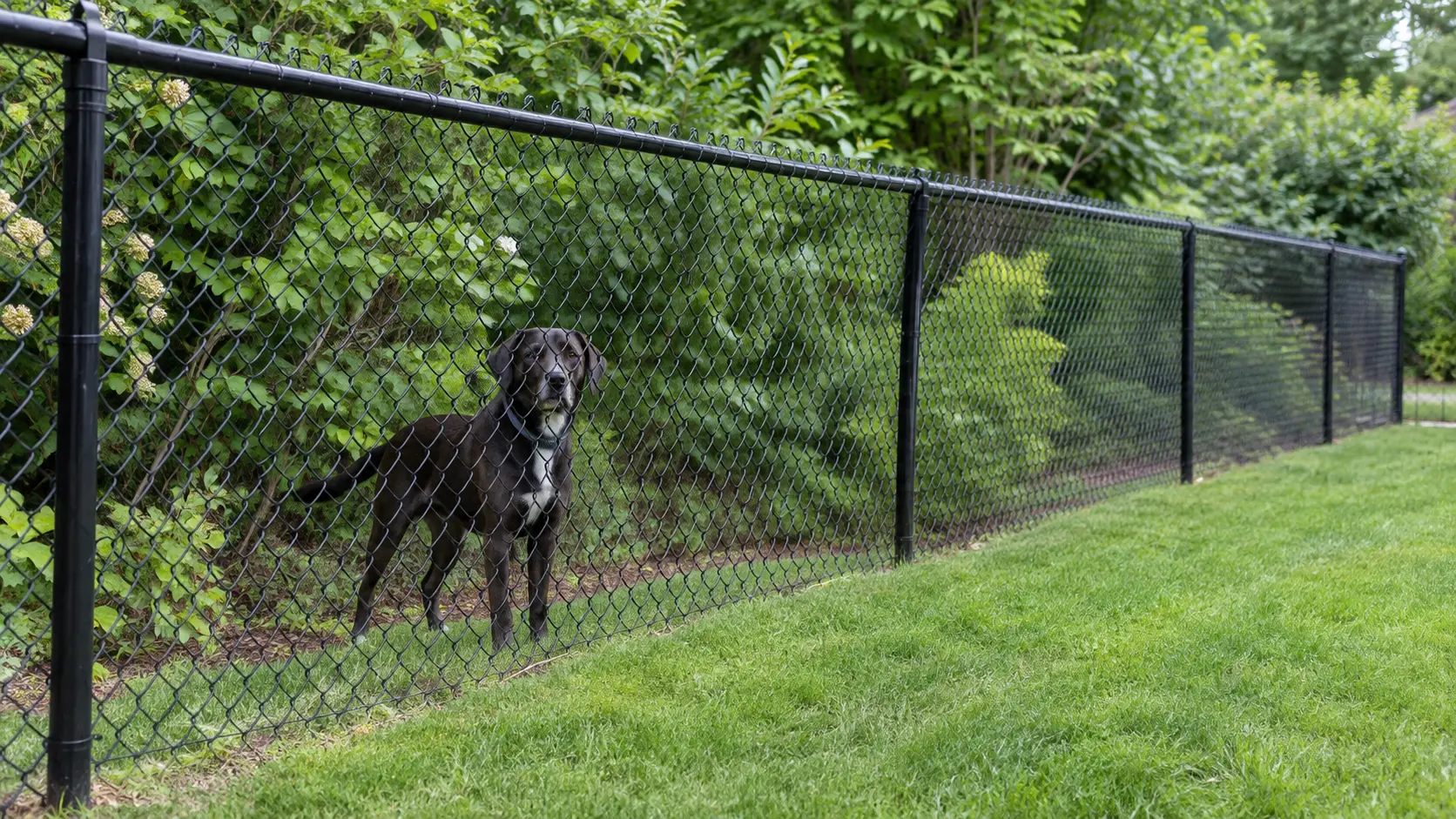
Chain Link Fencing
Chain link is the practical workhorse of dog fencing. It is strong, affordable, and lets you see your dog from anywhere in the yard. Galvanized or black vinyl-coated chain link holds up well in Illinois weather.
Climbing is the main weakness, since some dogs learn to use the diamond mesh as footholds. A smaller mesh size, privacy slats, or a 6-foot height usually fixes that. Chain link is also the easiest material to pair with a bottom tension wire or a buried apron for diggers.
Steel and Ornamental Iron Fencing
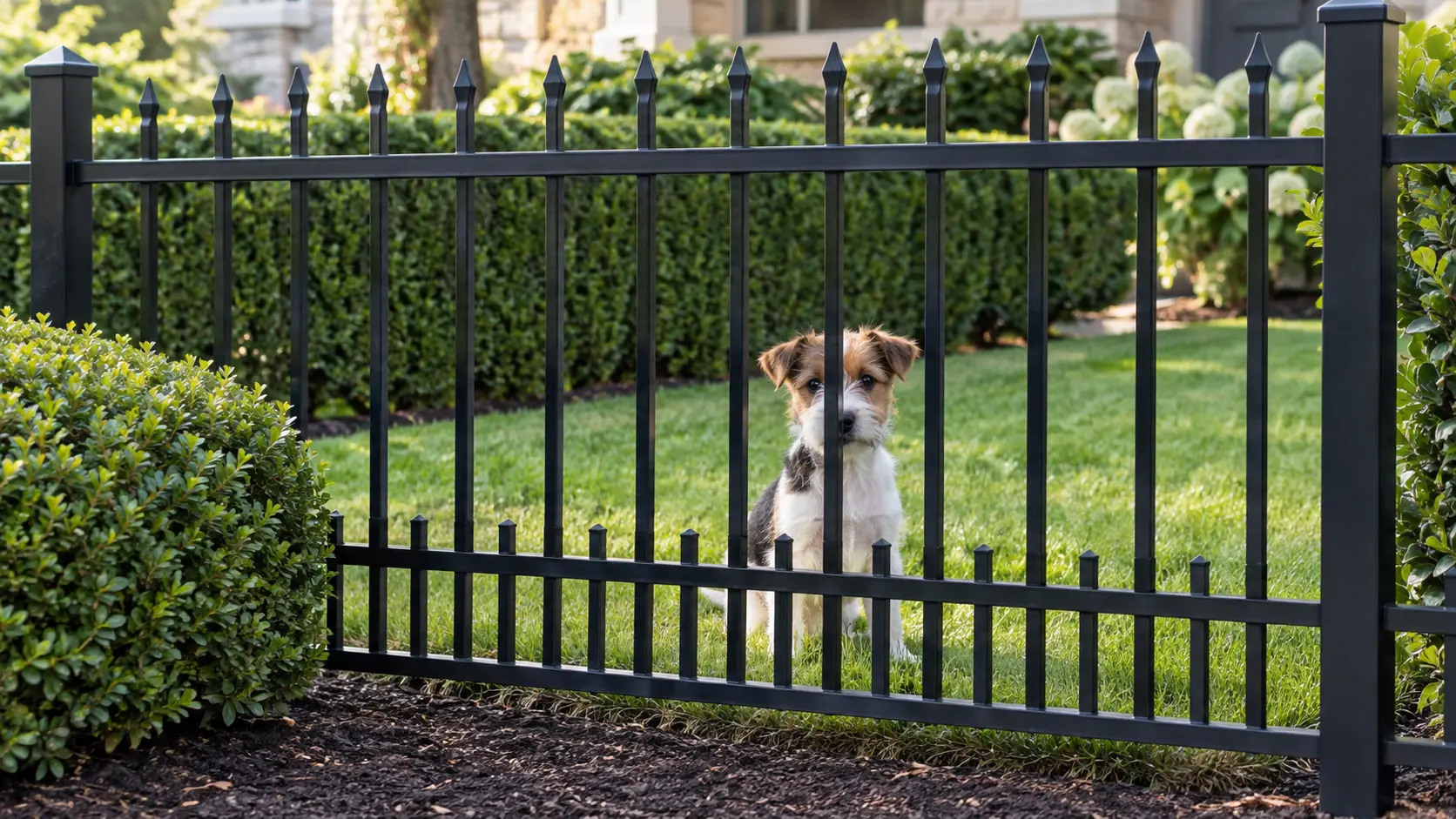
A steel dog fence is the choice for homeowners who want strength and a finished look in one package. Ornamental steel stands up to big, powerful dogs that might push through or bend a lighter fence, and a powder-coated finish resists rust for years.
For dogs, the key detail is picket spacing. Standard ornamental spacing can be too wide for small breeds or puppies, so we often recommend adding extra pickets along the bottom section, sometimes called puppy pickets, to close the gaps without changing the overall style. Because our crews weld on-site, we can adjust a steel fence to follow a tricky grade change or add a custom section exactly where your yard needs it.
Aluminum Fencing
Aluminum looks a lot like ornamental steel but weighs less and never rusts. It is a good fit for medium dogs that respect a boundary and for homeowners who want an open, elegant view of the yard. It is not the strongest option for large dogs that lean or jump against the fence, and like steel, it needs tighter picket spacing for small breeds.
Chain Link Dog Kennel
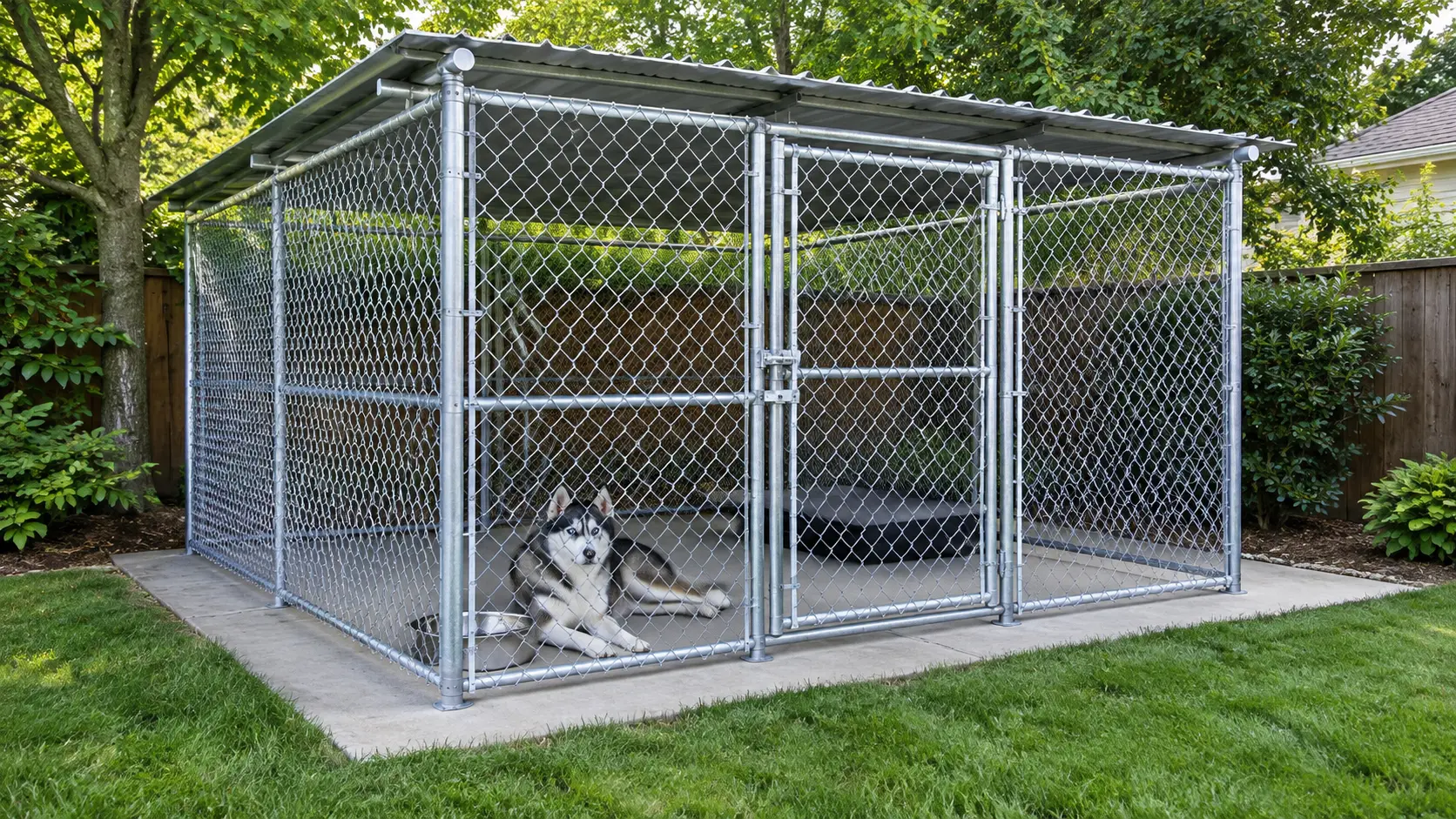
Sometimes the best solution is not a full perimeter fence at all, or it is a perimeter fence plus a secure dog run. A chain link dog kennel gives your dog a dedicated outdoor space that is fully enclosed, with an optional roof panel for climbers and jumpers. It is a smart option when you have a large yard but only want to fence part of it, or when your dog spends time outside while you are at work.
A well-built kennel sits on a concrete pad or gravel base so your dog cannot dig out. It should have a lockable gate and enough room for your dog to move around comfortably.
Quick Comparison: Which Dog Fence Fits Your Yard?
| Fence Type | Best For | Watch Out For |
|---|---|---|
| Wood privacy | Climbers, reactive barkers, privacy | Regular staining; chewers |
| Vinyl privacy | Climbers, chewers, low maintenance | Gap under bottom rail |
| Chain link | Budget, visibility, diggers (with apron) | Climbers using the mesh |
| Steel / ornamental | Large, strong dogs; front yards | Picket spacing for small dogs |
| Aluminum | Medium dogs, open views | Less strength for big jumpers |
| Chain link dog kennel | Partial yards, time away, escape artists | Needs a dig-proof base |
Details That Make Any Dog Fence Work Better
The fence material is only part of the equation. The right design and installation details can make an even bigger difference in keeping a determined dog safely in the yard.
Height
A 4-foot fence is usually enough for small, calm dogs. Medium and large dogs, especially athletic or anxious ones, typically need 5 to 6 feet. Many Chicago area communities limit backyard fence height, so confirm what your town allows before you settle on a design.
Dig Barriers
An L-shaped wire apron or a concrete footing below the fence line stops most diggers. Bring it up during your estimate, since it is far easier to install with the fence than to add later.
Gates and Latches
Gates are where most escapes happen. Self-closing hinges and a latch mounted out of your dog's reach keep the gate shut even when someone forgets. Ground clearance under the gate should be tight enough that a small dog cannot slip underneath.
Snow and Slopes
Drifting snow can turn a 5-foot fence into a 3-foot fence by February, so think about where snow piles up in your yard. On sloped lots, a stepped fence can leave triangular gaps at the bottom of each section. A good installer plans for both before the first post goes in.
Permits, HOAs, and Good Neighbors
Most North Shore municipalities require permits for new fences, and many have specific rules for height, setbacks, placement and which side of the fence must face outward. HOAs may have additional requirements for materials, style, or color. Because these regulations vary by community and can change over time, it is worth confirming the requirements before you finalize your fence design.
Fencing By Wall coordinates permits for our residential projects, so you do not have to navigate village paperwork on your own. We can also help you plan fence placement near property lines, which is especially important when a neighbor's dog is on the other side of the fence.
Why North Shore Dog Owners Choose Fencing By Wall
Fencing By Wall is a second-generation family business, founded by Jim Wall in 1988 and now run by Mike Wall. Our own crews handle every fence installation, so your project is never handed off to subcontractors. The team that measures your yard and talks with you about your dog is the same team that installs your fence.
We are members of the American Fence Association and build dog-friendly fencing in wood, vinyl, chain link, aluminum, and steel. With multiple materials to choose from, we can recommend a fence based on your dog's behavior, your property, and how you use your yard, not simply the material we happen to sell. We serve homeowners throughout Evanston, Skokie, Glenview, Wilmette, Highland Park, Northbrook, Arlington Heights, and surrounding North Shore communities.
Get a Free Dog Fence Estimate
If you are ready to give your dog a safe place to run and play, we would be happy to help. Schedule a free on-site estimate, and we will walk your property, learn about your dog's habits and recommend a fence and gate setup that fits your yard, your needs, and your budget.
Learn more about our dog and pet fence installation services, or contact Fencing by Wall to get started.
Dog Fencing FAQs
What is the best fence for a dog that jumps?
A 6-foot privacy fence in wood or vinyl is usually the best choice for a jumper. The smooth face gives a dog nothing to climb, and the solid boards block the view that often sets off a jump in the first place. For dogs that still test the height, Fencing By Wall can add an angled top extension or recommend a tighter chain link mesh.
How tall should a dog fence be?
A 4-foot fence works for most small, calm dogs. Medium and large dogs, along with athletic or anxious breeds, usually need a fence between 5 and 6 feet tall. Height limits vary by town and HOA, so Fencing By Wall confirms the local rules during your estimate before recommending a height.
Is a steel dog fence better than chain link?
It depends on your dog and your yard. A steel dog fence is stronger and more decorative, which makes it a good fit for large, powerful dogs and for front yards where curb appeal matters. Chain link costs less, keeps your dog visible, and is easy to pair with a dig barrier. Fencing By Wall installs both and can help you compare them for your property.
Do I need a chain link dog kennel if I already have a fence?
Not always. A chain link dog kennel makes sense when you want a fully secure space for times you are away, when only part of your yard is fenced, or when your dog has a history of escaping. Many homeowners use a kennel and a perimeter fence together.
How do I stop my dog from digging under the fence?
The most reliable fixes are a buried L-shaped wire apron, a concrete footing along the fence line, or a bottom tension wire on chain link. Each one is easiest and least expensive to add during installation, so mention digging when you request an estimate from Fencing By Wall.
Are invisible fences a good alternative to a physical dog fence?
Electronic fences can work for some well-trained dogs, but they do not keep other animals or people out, and a determined dog may run straight through the boundary. A physical fence is the more dependable choice for most families, especially near busy streets.