Ask five neighbors whether you should put up a wood fence or a vinyl fence and you'll get five confident answers, most of them based on whatever is standing in their own backyard. Here's the thing they're all skipping past: in Illinois, the fence itself is only half the equation. The other half is our weather, and our weather can be brutal on fences.
A privacy fence in the Chicago suburbs has to survive January nights below zero, July afternoons in the 90s, spring soil that turns to soup, and the freeze-thaw cycling in between that heaves posts out of the ground an inch at a time. Some materials shrug all of that off. Others need regular attention to keep up. Neither answer is wrong, but one of them is probably wrong for you.
We've been installing wood fences and vinyl fences across Chicagoland since 1988, so we've seen how both materials age here over decades, not just over a warranty period. Here's an honest comparison.What Illinois Weather Does to a Fence
Before comparing materials, it helps to understand what your fence is up against, because Illinois weather punishes fencing in a few specific ways:- Freeze-thaw cycling: Chicagoland soil freezes and thaws dozens of times each winter. Water in the ground expands as it freezes, and that expansion pushes against fence posts. Posts that aren't set below the frost line get shoved upward year after year until the fence leans. This affects every material equally, which is why installation quality matters as much as what the fence is made of.
- Humidity and moisture: Our humid summers and wet springs keep wood damp for long stretches. Moisture is what feeds rot, mildew, and the slow warping that turns straight boards into potato chips.
- Temperature swings: A fence here might see a 130-degree range across the year. Materials expand and contract with those swings, and how gracefully they handle it determines whether panels stay tight or start to gap and crack.
- Clay soil: Much of the Chicago area sits on heavy clay that holds water against posts. Wood posts in constant contact with wet clay are where most wood fences fail first.
The Case for Wood Fences
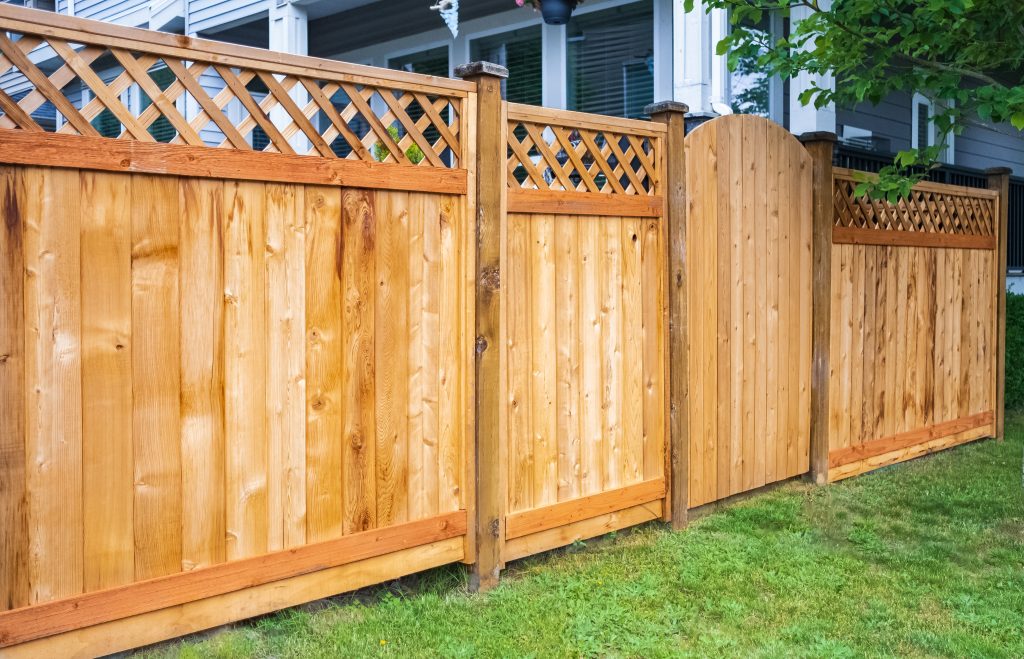
There's a reason wood fences are still the default picture in most people's heads when they think "privacy fence." Wood looks like it belongs in a yard. It's warm, it's natural, and it takes stain in any color you want, which matters if you're trying to match a deck, a pergola, or an HOA palette.Why Homeowners Choose Wood
- Lower upfront cost: A wood privacy fence typically costs less to install than a comparable vinyl one. If budget is the deciding factor right now, wood usually wins the initial quote.
- Natural appearance: No manufactured material fully matches real wood grain. On older streets with mature trees, a cedar fence simply fits the character of the neighborhood in a way vinyl sometimes doesn't.
- Easy to customize and repair: Wood can be cut, shaped, and built into custom designs on site. And when a board gets damaged, you replace one board, not a whole panel.
- Cedar handles our climate better than most wood: A cedar fence contains natural oils that resist rot and insects, which is why cedar is our standard recommendation for wood fencing in Illinois rather than pressure-treated pine pickets. It also stays straighter through humidity swings.
The Honest Downsides
Wood asks something of you every few years. Plan on staining or sealing a wood privacy fence every two to three years in our climate. Skip it, and unsealed wood grays out, absorbs moisture, and starts the slow slide toward warped boards, popped nails, and soft posts. Even well-maintained wood fences in Chicagoland typically last 15 to 20 years, with posts and gates usually failing first.
If you're the kind of homeowner who enjoys a weekend project and likes the idea of refreshing the stain color down the road, none of that is a dealbreaker. If your Saturdays are already spoken for, it adds up.The Case for a Vinyl Privacy Fence
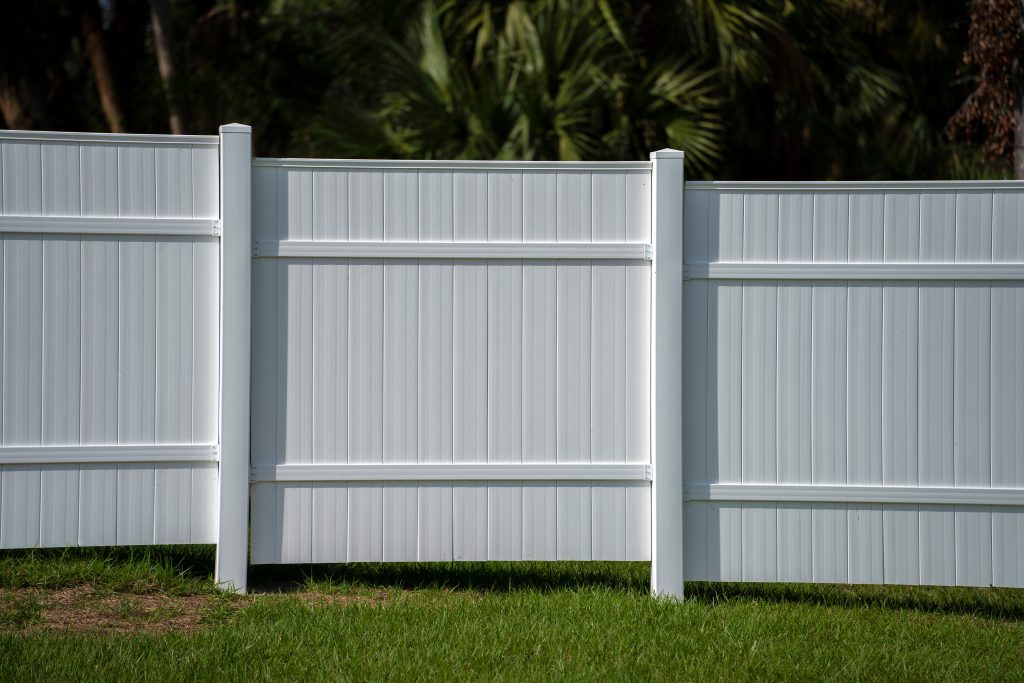
Vinyl earned its popularity in climates like ours. It doesn't rot, insects have no interest in it, and moisture rolls right off. A vinyl privacy fence installed correctly today will look close to identical in fifteen years, and it will get there without a single coat of stain.Why Homeowners Choose Vinyl
- Almost no maintenance: No staining, no sealing, no painting. A rinse with the hose once or twice a year handles most of it. For busy households, this is usually the whole argument.
- Immune to rot and pests: The failure modes that end most wood fences, rotted posts and insect damage, don't apply to vinyl at all.
- A clean, consistent look for decades: A white vinyl fence gives you that crisp, classic look, and because the color runs through the material rather than sitting on top of it, there's nothing to chip, peel, or fade unevenly. Modern vinyl also comes in tan, gray, and woodgrain textures if bright white isn't your style.
- Longer lifespan: A quality vinyl privacy fence commonly lasts 20 to 30 years in our climate, and the panels look good the entire time rather than aging visibly along the way.
The Honest Downsides
Vinyl costs more on the day of installation, sometimes noticeably more depending on style and height. It's also less forgiving of hard impacts in deep cold. Vinyl stiffens when temperatures drop, so a snowblower bump or falling branch that a summer fence would flex around can crack a panel in January. When that happens, you replace the panel rather than repairing it, which is a simple job but does mean matching material.
One more note: not all vinyl is equal. Thin, big-box-grade vinyl sags, rattles in wind, and yellows. The bad reputation vinyl picked up years ago came almost entirely from that end of the market. Commercial-grade vinyl with proper UV inhibitors behaves like a different product.What it Costs Over 20 Years, Not Just on Day One
The install quote is where most homeowners compare, but it's the least useful number. Here's the fuller picture.
A wood privacy fence starts cheaper. Then add staining every two to three years, whether you do it yourself or hire it out, plus occasional board and post repairs as the fence ages. Somewhere in year 15 to 20, many wood fences reach the point where replacement makes more sense than another round of repairs.
A vinyl fence starts more expensive and then mostly goes quiet. No staining, minimal repairs, and a lifespan that often runs a decade longer. For homeowners planning to stay put, vinyl frequently ends up the cheaper fence over its life. For homeowners planning to sell within a few years, the lower upfront cost of wood may be the smarter spend, and a freshly stained cedar fence shows beautifully at an open house.
Neither answer is universally right. It depends on your timeline, and that's a question only you can answer.A Quick Word on Permits and HOAs
Whichever material you choose, your village gets a vote. Nearly every Chicagoland municipality requires a fence permit, most cap privacy fence height at six feet in rear yards, and corner lots often carry sight-line restrictions. HOAs layer their own rules on top, and some are picky about material and color, which occasionally settles the vinyl-versus-wood question before aesthetics ever enter into it.
This is worth sorting out before you fall in love with a design. We handle permit coordination on every installation, so if you'd rather not spend an afternoon reading your village's fence ordinance, you don't have to.So which fence is right for your yard?
Choose wood if the natural look matters most to you, your budget is tighter right now than it will be later, or you want a custom design and don't mind maintenance as the price of admission. A cedar fence, properly sealed and set on posts below the frost line, is a genuinely good fence in Illinois.
Choose vinyl if you want to install it and forget about it. If the phrase "restain the fence" makes you tired, if you're planning to stay in your home for the long haul, or if you love the clean look of a white vinyl fence lining the yard, vinyl is the answer that keeps being the answer for the next 25 years.And if you're still torn, that's normal. Most of our residential consultations start with a homeowner who's halfway between the two, and the right answer usually becomes obvious once we walk the property together and talk through how you use your yard.
Talk Through Both Options with a Local Fence Company
Fencing By Wall has installed wood and vinyl fences across the North Shore and the Chicago suburbs since 1988. We're a second-generation, family-owned company, we never use subcontractors, and we'll give you a straight recommendation based on your yard, your budget, and your patience for maintenance.
Explore our vinyl fence installation services and our wood fence installation services to see styles and options for each. Or skip straight to the conversation by calling us at (312) 882-5094 for a free on-site estimate, and we'll help you land on the fence you'll still be happy with twenty years from now.Vinyl and Wood Fencing FAQs
Which lasts longer in Illinois, a vinyl fence or a wood fence?
A professionally installed vinyl fence typically lasts 20 to 30 years here with almost no upkeep. A cedar fence usually lasts 15 to 20, but only with regular staining or sealing. Installation quality matters as much as material, though. Posts set below the frost line survive freeze-thaw cycles far better than shallow-set posts of any kind.
Is a wood privacy fence cheaper than a vinyl privacy fence?
On the initial install, usually yes. Over 15 to 20 years, the math often flips, because wood fences need staining every two to three years plus periodic repairs, while vinyl needs little more than a rinse. If you're staying in your home long term, vinyl often costs less over the life of the fence.
Does vinyl fencing crack in Chicago winters?
Quality vinyl made for northern climates handles our winters well. It does stiffen in extreme cold, so a hard impact, like a snowblower or falling branch, can crack a panel in January that would have flexed in July. Damaged panels are replaced rather than repaired, which is one more reason to install commercial-grade material from the start.
How often does a cedar fence need to be stained in Illinois?
Every two to three years for most yards. Humid summers and wet springs speed up weathering, and unsealed cedar grays out and starts absorbing moisture, which leads to warping and rot. Fences in heavy sun or damp, shaded yards may need attention sooner.
Will a white vinyl fence turn yellow over time?
Quality white vinyl with UV inhibitors holds its color for decades. The yellowing people remember comes from the cheap, thin-walled vinyl sold years ago. Modern vinyl carries its color through the entire material, so there's nothing to chip, peel, or repaint.
Do I need a permit to install a privacy fence in the Chicago suburbs?
Almost certainly. Nearly every Chicagoland municipality requires a fence permit, most limit privacy fence height to six feet in rear yards, and HOAs often add material and color rules on top. Fencing By Wall handles permit coordination as part of every installation.