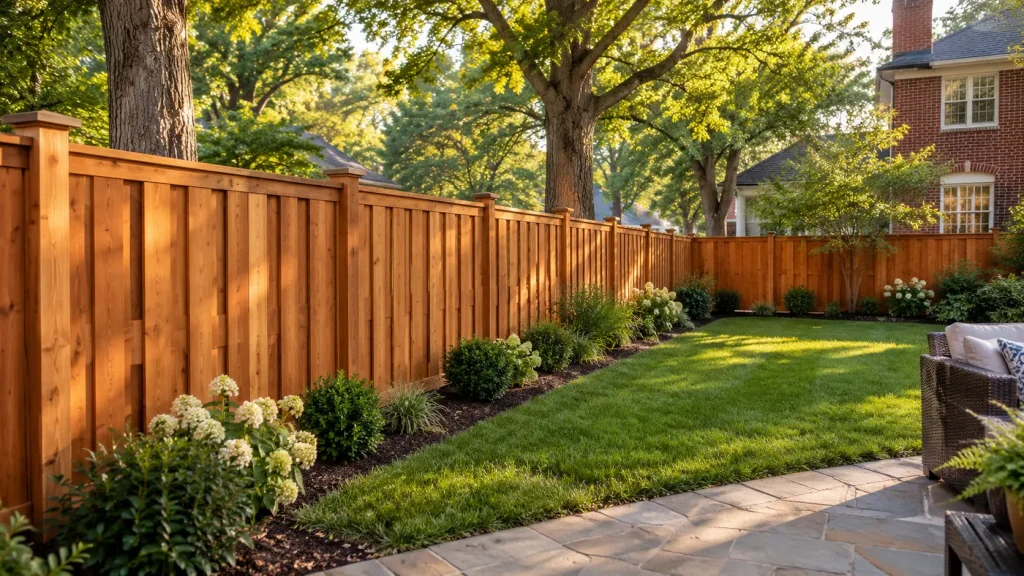
Drive down almost any street in Wilmette or Northbrook and you'll see plenty of wood fences. They may all start with the same basic construction consisting of boards attached to posts, but that's where the similarities end. One creates a completely private backyard. Another uses open rails to define the property without blocking the view. The style you choose affects how much privacy you get, how the fence handles a windy Chicago winter, and how your home looks from the street.
Wood remains a popular choice for North Shore homeowners for good reason. It adds warmth alongside brick, landscaping, and mature trees, and individual boards can be replaced if they become damaged. But not every wood fence style works equally well for every yard.
This guide covers the most common wood fence styles, what each one offers, and where they tend to work best. We'll also explain why cedar is such a popular choice for homes throughout the North Shore.
Start With What the Fence Needs to Do
Before you choose a style, decide what you need the fence to accomplish. A wood privacy fence around a patio or pool needs solid coverage and may call for the tallest height your village allows. If you're fencing in a new puppy, a tight gap along the bottom may matter more than blocking your neighbors' view. For a front yard, appearance and curb appeal often take priority, and height limits are typically more restrictive than they are in backyards.
Local fencing rules also vary from one municipality to another, and an HOA may have its own design and approval requirements. Fencing By Wall handles residential permits as part of the residential fence installation process, so you don't have to sort through village requirements on your own.
Stockade Fence
A stockade fence is the classic solid wood privacy fence. The boards are installed tightly together with no intentional gaps, and the tops are typically pointed or rounded. If someone says "privacy fence" without describing a particular style, this is probably the fence they have in mind.
The appeal is simple: stockade provides full privacy while using less lumber than overlapping privacy styles because the boards sit edge to edge. That generally makes it one of the more affordable wood privacy options, and its straightforward design makes installation relatively quick along a long rear property line.
There are a few trade-offs to consider. The rails and posts are visible from one side, so one neighbor will see the structural side of the fence. Many municipalities also require the finished side to face outward, which may mean that side faces your yard. Wood naturally shrinks as it dries, so small gaps can develop between boards during the first season. That's normal with a tight-board fence and isn't a sign that the fence was installed incorrectly.
Shadow Box Fence
A shadow box fence alternates boards on opposite sides of the rails. One board is installed on the front, the next on the back, with each board overlapping the one beside it. From straight on, the fence looks solid and private. From an angle, the offset boards create the depth and shadow lines that give the style its name.
Shadow box is popular because it looks finished from both sides, which is why it's often called a "good neighbor" fence. The spaces between the offset boards also allow some air to pass through, reducing the amount of wind pressure the fence takes compared with a solid panel. That's especially useful on lakefront and bluff properties in Lake Forest or Highland Park, where strong Lake Michigan gusts can put added stress on fence posts.
The trade-off is cost. Shadow box requires more boards per linear foot than stockade, so it's typically more expensive. And while it provides strong privacy from most angles, someone standing at a sharp angle may still catch brief glimpses through the spaces between the boards.
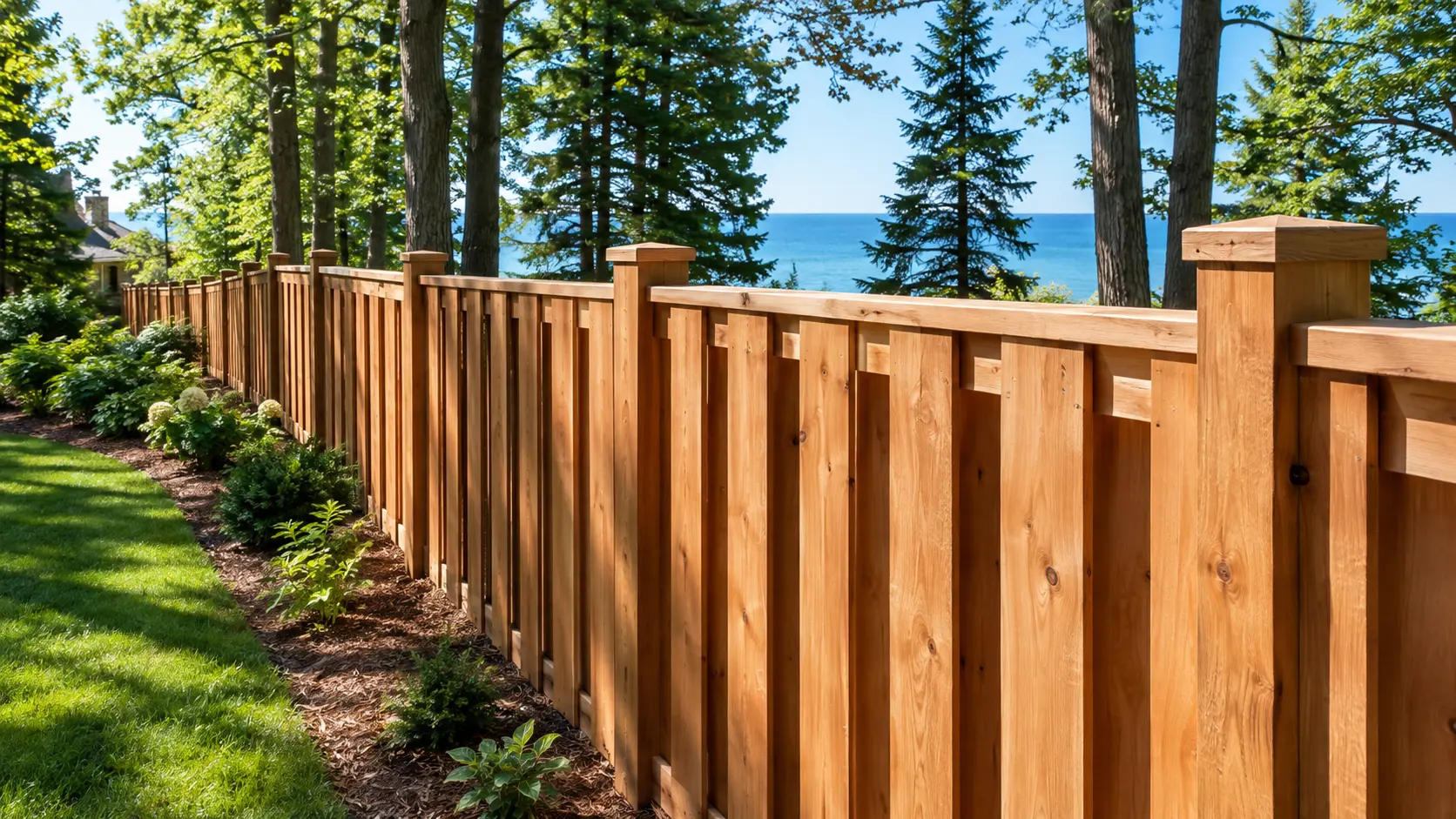
Board-on-Board Fence
Board-on-board is a close cousin of shadow box, and the two styles are often confused. In the version most fence installers mean, the boards are mounted on the same side of the rails, with each board overlapping the one next to it. Because the boards overlap, normal wood shrinkage won't create a clear line of sight through the fence.
If maximum privacy is the priority, board-on-board is one of the strongest wood fence options. The overlapping boards create a solid, substantial barrier with fewer concerns about gaps developing over time. The trade-off is material and cost: it requires more lumber than stockade or shadow box, putting it toward the higher end of wood privacy fencing.
Fence terminology isn't always consistent, so don't rely on the name alone when comparing estimates. Ask the contractor to show you a sample or photo of the exact board layout included in the quote.
Split Rail Fence
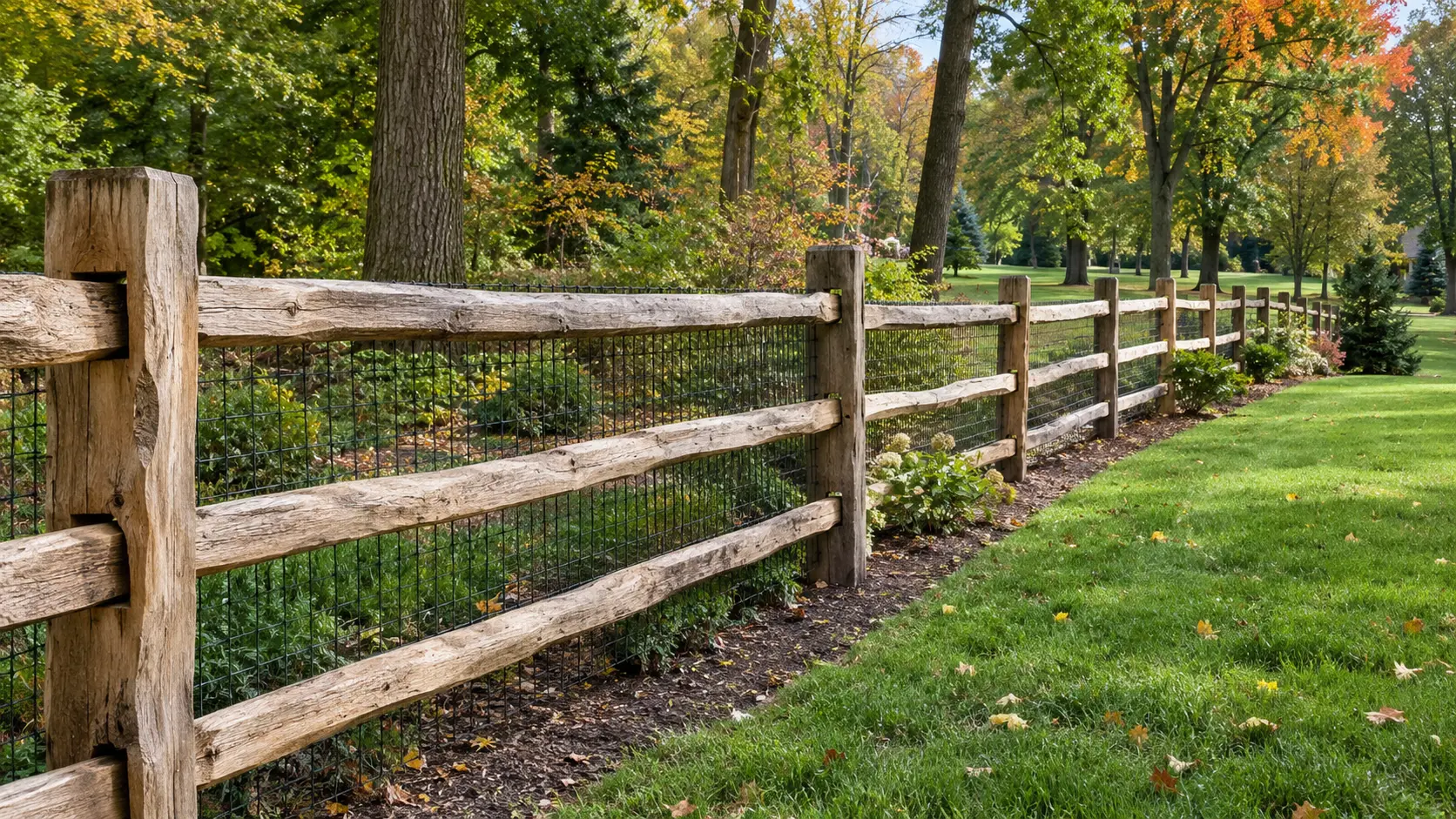
Split rail sits at the opposite end of the privacy spectrum. Two or three horizontal rails, often rough-sawn or split for a rustic texture, fit into notched posts with little or no hardware. Instead of blocking views, a split rail fence simply defines the property line and creates a visual boundary.
The style works especially well on larger lots and wooded properties. On bigger parcels in Lake Bluff or Libertyville, a split rail fence along the road can blend naturally with the surrounding landscape while maintaining an open view. It's also one of the more affordable wood fencing options per linear foot.
A split rail fence won't contain a small dog or toddler on its own. Many homeowners add welded-wire mesh to the inside of the fence, preserving the open look from the street while providing the containment they need in the yard.
Picket Fence
A picket fence is typically short, about three to four feet tall, with evenly spaced vertical boards. It isn't designed for privacy. Instead, it frames the house, defines a front walkway, or adds a finished edge around a garden. Picket fences are especially well suited to the older colonials and bungalows found throughout Evanston and Wilmette, where a front fence should complement the home's architecture rather than obscure it.
Horizontal Wood Fence
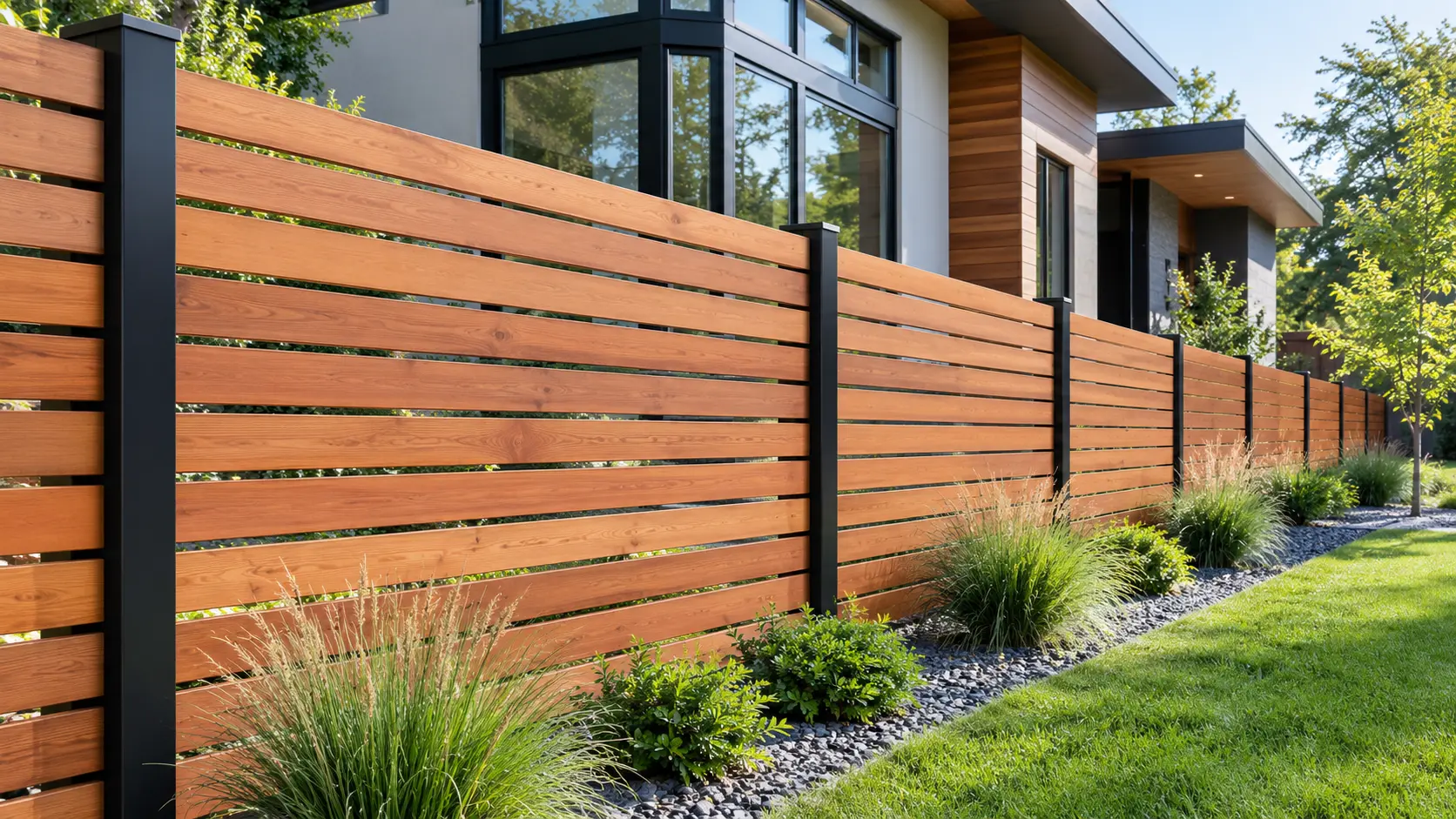
Horizontal fences run the boards from post to post rather than vertically, often with narrow, consistent gaps between them. The result is a clean, modern look that pairs especially well with contemporary homes and newer construction. Depending on the spacing, a horizontal fence can provide complete privacy or a more open, semi-private screen.
The style also demands careful installation. Long horizontal boards are more prone to sagging between posts, so the fence may require closer post spacing or additional center support. Because every board creates a strong horizontal line, even a slight dip or uneven installation is easy to spot. Straight, stable lumber and precise installation make a noticeable difference in the finished fence.
Toppers and Details That Change the Look
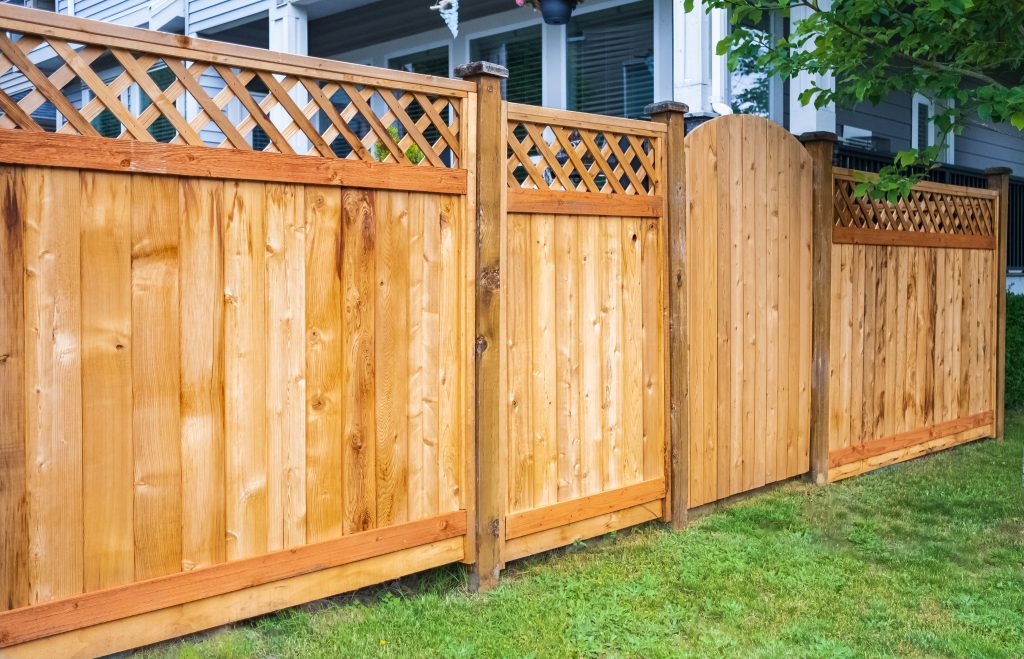
Two fences in the same style can look and feel very different once you change the finishing details. A lattice topper adds height without creating a completely solid wall, allowing light and air through while softening the appearance of a tall privacy fence. It can also give climbing vines a natural structure to grow on.
Post caps provide another simple finishing touch. They give the fence a more polished appearance while helping shed water away from the exposed end grain of each post, where moisture can contribute to premature deterioration.
Why Cedar Is the Top Choice for North Shore Wood Fences
Most wood fences in the Chicago suburbs are built from cedar or pressure-treated pine. Pine typically costs less upfront, but for homeowners who want a fence that looks good and holds up for years, cedar is often worth the additional investment.
Cedar contains natural oils that help it resist rot and insects without chemical treatment. It's also naturally dimensionally stable, so it's less likely to twist, cup, or warp as temperatures and moisture levels change through Illinois freeze-thaw cycles. Pressure-treated pine is more prone to checking and warping as it dries, which can be especially noticeable on styles with long, exposed boards, such as horizontal fences. Cedar is lighter, too, which can put less strain on gate hinges and hardware over time.
Left unfinished, cedar naturally weathers to a soft silver-gray color, a look many homeowners appreciate. If you prefer to preserve its original reddish-brown tone, you can stain or seal the wood. Either way, cedar is a durable, low-maintenance choice for a wood fence in the Chicago area.
Building a Cedar Privacy Fence
Every privacy style in this guide can be built with cedar. A cedar shadow box fence is one of the most popular combinations we install because it offers a finished look from both sides while cedar stands up well to the moisture and weather common along the North Shore. For homeowners who want maximum privacy with no intentional gaps, cedar board-on-board provides an even more solid barrier.
Cedar is available in different grades and board thicknesses, and those choices affect both the fence's appearance and its cost. We'll walk you through the available options during your estimate so you can choose the right combination for your property and budget.
Posts and Gates Matter as Much as Style
Style gets most of the attention, but the posts are what keep a fence standing. In northern Illinois, posts need to be set deep enough to withstand frost heave, the seasonal ground movement that can push shallow posts upward and out of alignment. Even the best-looking fence won't stay that way if its posts start leaning after a couple of winters.
Gates deserve the same attention. Heavy wood gates can sag over time, especially on wide openings. Fencing By Wall offers on-site welding to build steel-framed gates that are clad in wood to match the rest of the fence. Our own crews handle every installation from start to finish, with no subcontractors. That means the people installing your posts and hanging your gates work for the same company that quoted your project.
Matching a Style to Your Yard
If you're still deciding, these pairings are a good place to start:
- Total backyard privacy: Stockade gives full coverage for less, while board-on-board closes every gap.
- Windy or lakefront lots: Shadow box lets air pass through and looks finished from both sides.
- Large or wooded properties: Split rail marks the line without blocking the view, and wire mesh can be added for pets.
- Front yard curb appeal: A picket fence frames the house and usually fits within lower height limits.
- Modern homes: A horizontal cedar fence offers a clean, contemporary look.
Get a Free Wood Fence Estimate from Fencing By Wall
Fencing By Wall has been building fences for homeowners since Jim Wall founded the company in 1988. Today, his son Mike runs the business, carrying that family-first approach into every project. As members of the American Fence Association, we bring decades of fencing experience to homeowners from Skokie to Lake Forest and help you choose a wood fence that fits the way you use your yard.
Ready to compare your options? Explore our wood fence installation services and contact Fencing by Wall to schedule a free on-site estimate. We'll measure your property, discuss your goals, and review your village's height and placement requirements. Then we'll recommend a fence style and materials that fit your property, priorities, and budget.
Wood Fence FAQs
What is the most private wood fence style?
Board-on-board is usually the most private wood fence style because the boards overlap, so no gaps open up as the wood shrinks. A stockade fence also provides full coverage at a lower cost, though small gaps can appear between boards as they dry. Fencing By Wall can show you samples of both during an on-site estimate.
What is the difference between a shadow box fence and a board-on-board fence?
A shadow box fence alternates boards on opposite sides of the rails, so it looks finished from both sides and lets air pass through. A board-on-board fence layers overlapping boards on the same side for complete privacy. Because contractors sometimes use these names interchangeably, ask to see a photo or sample of the exact style being quoted.
Is a cedar fence worth the extra cost over pressure-treated pine?
For most homeowners, yes. Cedar resists rot and insects naturally, and it holds its shape through freeze-thaw cycles far better than pressure-treated pine. Pine costs less up front, but a cedar wood fence typically looks better for longer with less upkeep.
How long does a cedar fence last in the Chicago area?
A well-built cedar fence often lasts 15 to 20 years or more in the Chicago suburbs. Lifespan depends on post installation, drainage, and whether the wood is stained or sealed. Posts set deep enough to resist frost heave make a big difference.
Which side of a wood fence should face my neighbor?
In most cases, the finished side of a wood fence faces outward toward the neighbor or street, and some municipalities require it. Shadow box and board-on-board styles look finished from both sides, which avoids the question entirely. Fencing By Wall reviews local requirements before installation.
Does Fencing By Wall help with fence permits?
Yes. Fencing By Wall coordinates permits for residential wood fence projects across the North Shore and northwest suburbs of Chicago. Height limits and placement rules vary by village and HOA, so we confirm the requirements for your property before any work begins.